|
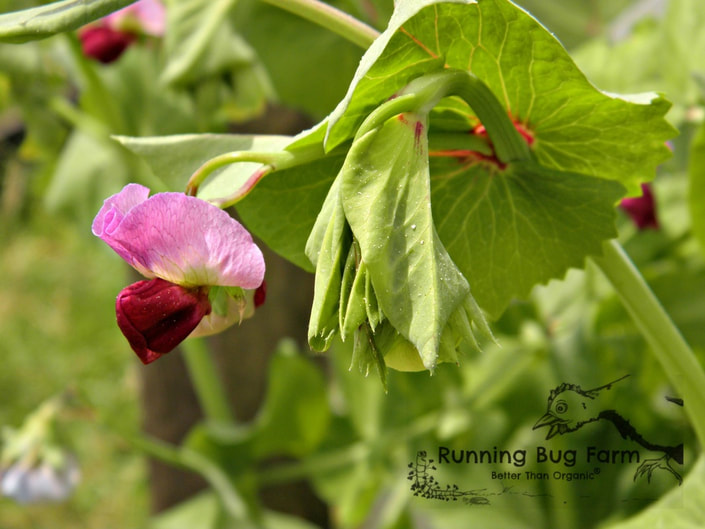
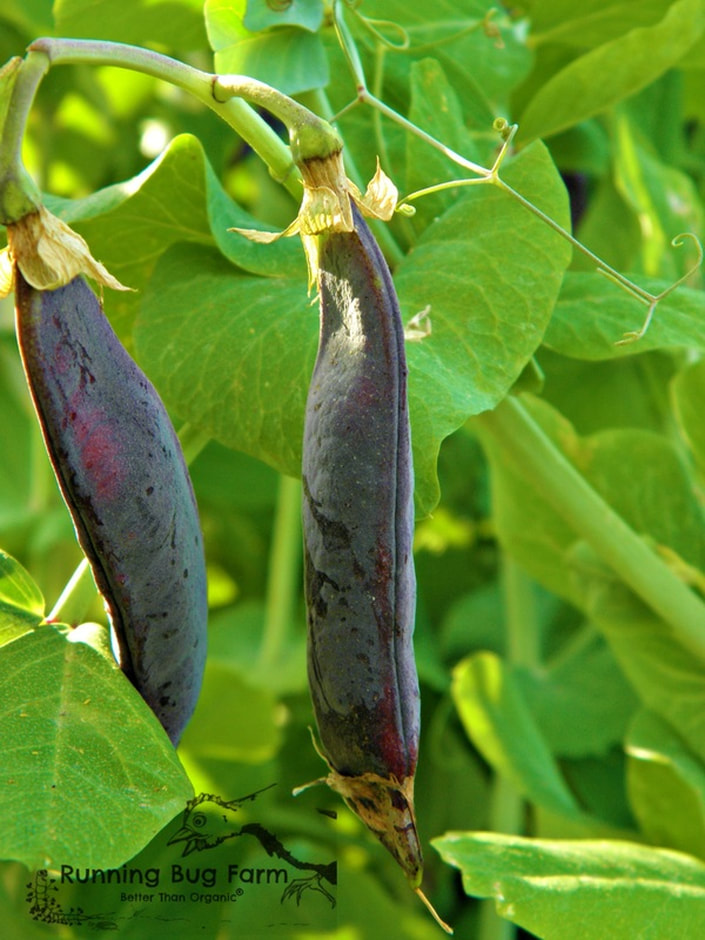
The Blue Podded Pea colorfully produces lovely purple-blue pods that can be harvested young & used as a snow-pea, or let mature & shell for soup peas (dry soak overnight for dried peas). The flowers are a beautiful purple/red & the pods are a deep purple/blue. The Blue Podded Pea is productive Dutch strain of heirloom pea that dates back hundreds of years & remains popular to this day. Peas do well when it's cool (think spring & fall). For the highest yields make sure they have a trellis to climb. This ensures more of the plant gets sun. Continually harvest ripe pods to increase the harvest time. If saving for seed &/or soup, leave the pods on the vines until they dry & the seeds (peas) become hard. Temperature for Germination: 45 - 75F Direct Sow: As soon as the soil can be worked (approx. 2 weeks before the last expected frost date). Size: 24" - 36" Hardiness: Hardy Annual Hardiness Zone: 2 - 11 Sun: Full Water: Moderate Seed Spacing: 2” Seed Planting Depth: 1" Row Spacing: 6" Plant Spacing: 6" Days to Germination: 7 - 14 Mature: 80 - 85 days Lemon Balm (Melissa officinalis) is a calming herb in the mint family with a delicate lemon flavor. It is both a culinary & medicinal herb. It is often used for sleeping problems, menstrual cramps, gastrointestinal problems such as gas & nausea, urinary spasms & nervous agitation. It can also be added to skin treatments for problems such as cold sores. The chopped fresh leaves of lemon balm can be tossed into a salad or added to a dish to add a lemony zest to sweet dishes such as fruit salads, drinks, custards & sorbets. It also pairs well with tangy dishes adding a lemony zest. Like most herbs, it can be used to make herb butter & added to sauces & marinades. It makes for a great addition to poultry stuffing, lamb, pork & fish. It combines well with allspice, bay leaves, mint, pepper, rosemary, thyme, chervil, pepper & parsley. Be sure to add your lemon balm (or any other fresh herbs with essential oils) to the end of cooking. High heat can damaged the essential oils & reduce the flavor. Lemon balm is a pick & come again herb which produces well when heavily picked. Harvest in mid to late afternoon when the oils are strongest & they are at their most aromatic. Leaves should be handled delicately as they tend to bruise & turn black. Lemon balm grows best in well drained rich soil & is sensitive to frost. If you let your lemon balm go to seed, it will easily self sow or you can save the seed to plant in a new location. It does not produce runners like mint, but will easily spread as seeds mature. Keeping the plant trimmed will reduce dropped seeds & keep the plant healthy & bushy. To dry, cut at the base, lightly tie together & hang to dry in a cool dry location free from sun & bugs or put into your food dehydrator & follow the directions for your machine. Once dry store in glass jars. You can crush it by hand or add it a food processor (best to remove the stems first). Seeds should be harvested after they begin to turn brown. Cut stem & place in a paper bag to collect the seeds. Temperature for Germination: 20°C (68°F). Direct Sow: After all danger of frost, or start indoors 6 - 8 weeks before last frost. Size: 24" - 36" Hardiness: Hardy from zone 5 and above. Sun: Full - Part Shade Water: Moderate Seed Spacing: 3 to 4 seeds per 12” Seed Planting Depth: Lightly cover seed (Approx. 1/8"). Row Spacing: 12" Days to Germination: 10 - 14 Thin: To one plant when plants have 4 leaves. You may also like:
Hibiscus is both a culinary & medicinal herb. It is commonly used to for high blood pressure, liver health & hangovers to name just a few. The bright red calyxes of the hibiscus plant can be used to make "red zinger" tea (tea needs to be boiled to get the deep red color & flavor. Simmer for 10-20 min. or longer.), sauce, syrup & jam (you don’t need to add pectin because hibiscus leaves contain 3 percent pectin.), or candied whole. The leaves can be used fresh in salads. Cut open calyxes & remove the white seed capsule at the base, then rinse prior to use. To grow hibiscus from seed you must first nick or sand the seeds to get moisture into the seeds in order to improve the germination rate. In temperate zones, start hibiscus in pots at the same time as you would tomatoes. When seedlings are 3" - 4" high, transplant them to a sunny spot in the garden. Hibiscus grows well in soil with a high level of organic matter, but too much nitrogen will delay flowering. Keep plants evenly moist & well-weeded until they are 1 1/2' - 2' high. Once this height is reached, mulch the plants to keep weeds at bay for the rest of the season. Pick young calyxes by hand when still tender or use garden clippers once stems have gotten tough. Pick approx. 10 days after flowers open at the beginning or the end of the day. Harvesting the calyxes early promotes greater yields. Around 6 weeks, the young edible leaves & shoots can be picked. Fresh calyxes are typically dried or dehydrated prior to storage. You can keep them fresh in the refrigerator for 4 – 7 days. Leaves & stem tips can be stored in the refrigerator for about a week. Cut the base of the calyx with a knife & pop out the seed ball. Note: calyxes may have tiny fine spines that can get stuck in your fingers. Place the leafy red part in your dehydrator & dry per your dehydrators instructions. You can discard or safe the seed pods. If saving, it is best to dry them separately from the red calyx petals. Dry the seeds per your dehydrators instructions. Once dry, the pods will crack open. You can then shake & dump out the seeds into a light proof saleable container. Keep in a cool dry environment until ready to plant. Temperature for Germination: 75 - 85°F Sow Indoors: 4–8 weeks before average last frost. Direct Sow: After average last frost. Size: 36" - 60" Hardiness: Frost-tender perennial Sun: Full (needs 13 hours of light to bloom) Water: Low - Moderate Plant Spacing: 3' Seed Planting Depth: 1/4" - 1/2" Row Spacing: 5' Days to Germination: 7 - 14 days Maturity: 90 - 100 days Harvest: 90 - 150 days Grow your own rare naturally colored chemical free cotton for spinning, textiles & more! If you spin, you will welcome having your very own chemical free cotton. Everyone should try growing cotton at least once, it is a memorable experience rich in American history. Our rare heirloom cottons have fallen out of production for the conventional white cotton grown today. Unless organic, this conventional cotton is heavily sprayed & one of the top GM crops grown along with crops such as corn & soy. Cotton is an annual plant that requires a long, warm growing season to mature properly. Needs full sun. In zones 8–10 it can be sown directly after the last frost. In zones 5–7, treat like tomatoes, start seed indoors and transplant out 4–8 week-old seedlings after last frost. Seed germinates in 7–21 days at 70°F. Plant 18–30 in. apart in rows 5 ft. apart. Plants start flowering in mid-summer. Bolls take a few more months to mature; warm late summer weather is necessary for a good crop. Plants grow to 5–6 ft. tall. 135 days. Seeds are easier to remove from the lint than other cottons. Staple length is longer than other heirloom brown cottons. Spun cotton has some shine. Direct Sowing: Sow seed in a light, well drained, slightly acid to neutral soil. Supply soil generously with compost or other organic matter, especially in clay. Sow no deeper than 2 - 4 times the seed diameter. Do not sow in waterlogged soil or heavy clay. Transplanting: Use a good quality sterile seed starting mix. Sow pots or flats 4 - 8 weeks before transplanting. When several leaves have developed, harden off the seedlings by placing them outdoors in direct sunlight for no more than an hour. Gradually increase the outdoor exposure over a period of several days. Transplant to the garden after the last frost. Harvest: Wait for bolls to split open before harvesting. Seed Savers: Isolate varieties by 1/8 mile for home use, or 1/4 to 1/2 mile or greater for pure seed. "Conventional cotton is considered the world's 'dirtiest' crop due to its heavy use of insecticides, the most hazardous pesticide to human and animal health. Conventional cotton covers 2.5% of the world's cultivated land yet uses 16% of the world's insecticides, more than any other single major crop. Aldicarb, parathion, and methamidopho, three of the most acutely hazardous insecticides to human health as determined by the World Health Organization, rank in the top ten most commonly used in cotton production. All but one of the remaining seven most commonly used are classified as moderately to highly hazardous. Aldicarb, conventional cotton's second best selling insecticide and most acutely poisonous to humans, can kill a man with just one drop absorbed through the skin, yet it is still used in 25 countries and the US, where 16 states have reported it in their groundwater." - Organic Trade Association |
Affiliate DisclosureThis page may contain affiliate links. If you choose to make a purchase after clicking an affiliated link, I may receive a commission at no additional cost to you.
As always, thank you so much for your support. I couldn't do what I do without you! Categories
All
Archives
February 2025
Hi there! My name is Jen. I'm a "tree hugging dirt worshiper" who has been organically farming for nearly two decades. It never ceases to amaze me at how much I've learned & how much I am still learning. I have studied natural health, nutrition, & herbs for nearly three decades. Our health & the natural world around us are connected in ways we don't often realize. How we treat the land & animals directly affects us in both body & mind. My goal is to provide others with truly natural humane goods from my own little piece of paradise, & to freely pass along whatever knowledge I pick up along the way. I am grateful every day to be able to have such a worthwhile & fulfilling job surrounded by the beauty & unpredictability of Mother Nature.

Copyright
You're welcome to link to Running Bug Farm or use a single image with a brief description to link back to any post. Republishing posts in their entirety is prohibited. |
RSS Feed