RUNNING BUG FARM
  • Shop
  • Reviews
  • Blog
  • About
  • Resources & Support
  • Angora Rabbit Colors

Food or War

2/10/2021

 
When we cherry pick from history, we can create a version of history we want others to believe.
Cherry Picked & Not Very Good At It
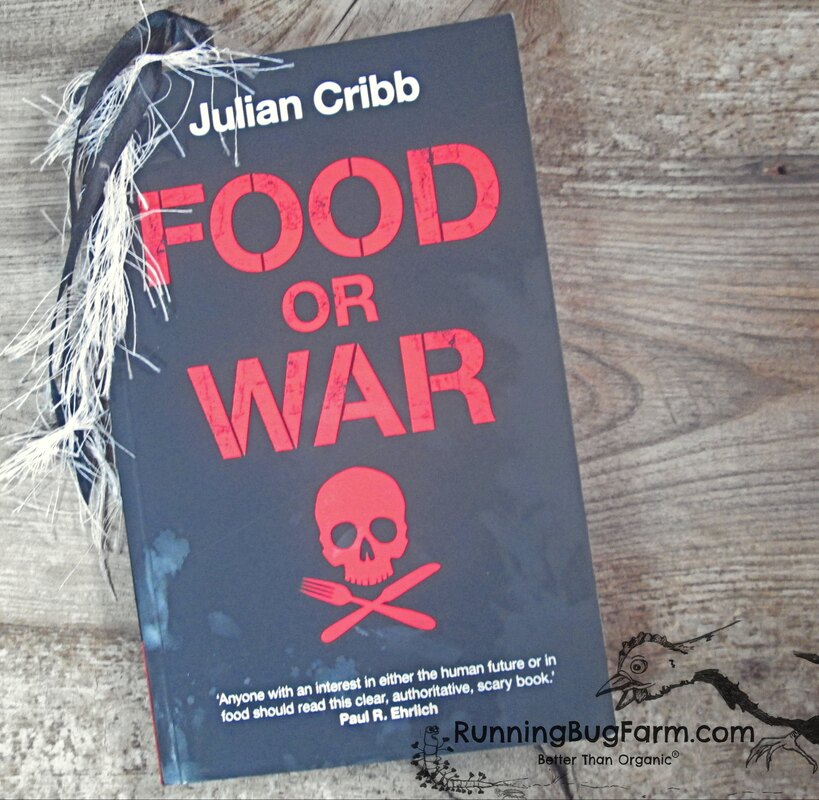
Food or War by Julian Cribb

Food or war? The author sets out to convince the reader that the majority of wars have been fought over food. By cherry picking history, you could conclude that & many other things, but the reality is that for the most part wars are fought for power. To see who has the biggest ding dong. Sometimes as with King Alfred The Great, the wars are fought for religion rather than to see who has the biggest ding dong. King Alfred wanted there to be one "Englaland" all peoples speaking one language & all practicing one religion. He wanted the Danes, Northmen, & anyone else out of his country if they didn't convert to his religion.

The author lost me almost immediately with his weak history of the Viking era. We know very little of the "Northmen" or the "Danes" from the Viking era because nothing was written down in their cultures. Everything was verbal. The first written accounts were from the monks who witnessed the Viking ships arrive on their shores to ravage & pillage. Having the view point of only one side of the story is hardly accurate & that is the view the author has. It is very disappointing. His view is so misguided he even seems to view the "Vikings" as a race rather than an activity, "To go Viking." He claims that "Vikings" fought for food. Sure, they wanted land, but they fought for much more than just food. They fought for glory, they fought to make a name of themselves to be retold long after they are gone. They fought to go to Valhalla (die with a sword in their hand), they fought for riches & fame. Sound familiar like maybe having a big ol' ding dong?

I'm not a history professor, so take what I say with a grain of salt, but as the author moves forward in history, it seems like he has a better grasp of it. Probably because so much more of human history gets recorded. He even mentions when Stalin had his farmers murdered because his people were starving & he viewed his own farmers as his enemies. When this made the food crisis worse, he killed more farmers. Yeah that'll fix it! Then in 1975 Cambodia decided to try out the USSR's & The People's Republic of China's failed farmer killings & started to kill off their rice farmers.

The author then continues along in this slog of a read to try to force his idea that wars are started due to a lack of food. It's a great way to twist it. I'll give him that, but common sense & history say otherwise. Armies must be fed. So a army or war can cause hunger or starvation either by large marching armies moving through the land & ravaging it's resources like a swarm of locusts or because of sieges where one side tries to starve the other. I'm not saying that food has never been a cause for war, just that it's not the cause as the author wants us to believe.

He then discusses the different ways humans are producing food. Things like mono cropping, concentrated feed lots, Eco farming, organic farming, gene editing (CRISPER), biotechnology, GMO's, chemicals, etc.

An interesting thing he suggests is that gender confusion has been caused by the chemicals in our food. I told this to my husband & he scoffed at it. The thing is, I can see this being real. My reason is because chemicals in our environment have already been proven to alter the sexes of frogs. This is real & it's happening now. So why not mess up humans too? With an author who speaks out against pseudo foods aka processed "foods" & chemicals you'd think he'd be against GMO's & other unnatural practices right? Wrong.

The author thinks the only mistake made with Genetic Engineering is not being open about it with the public. He's all for GMO rice & many other genetically modified franken foods. Yet he is anti chemicals. But but but, GM "foods" are engineered to survive being doused in copious amounts of chemicals while everything around them dies. This is hardly environmentally friendly or good for us. It seems the author has fallen for the Kool Aid that we need GMO's & CRISPER to feed the world. He would be far better looking at all the waste humans create. Humans throw out a shameful amount of food while overeating & getting fatter every day. We don't need to produce more food, we need to eat less & eat real food, not franken foods or processed factory foods that have been engineered to cause overeating.  
The author promotes & encourages gene editing, farm robotics, artificial intelligence, nanotechnology, advanced pest control, biocultured "food" & more. I've already covered why gene editing isn't a good idea, how about nanotechnology? This is still way too new & nano particles are so small, it is believed they have the potential to wreck havoc on not only our bodies but also our ecosystems. What about biocultured "food"? He thinks that we humans wont like it at first but as with synthetic materials aka oil byproducts we will learn to love it. Sorry but I don't want to eat biocultured steak or fish. Nor do I want to eat farmed fish. I find all of this deeply disturbing & going further from the natural world rather than embracing it.

The author feels we should reallocate 20% of spending money away from defense & towards "peace through food". This is a noble idea, but no matter what the author wants us to believe, war is not about food. When a country no longer has the biggest ding dong, another country is sure to move in for the kill & be the new biggest ding dong on the planet. I'll gladly keep that defense budget high thank you very much. My freedom is pretty important to me. But hey, I'm an American & the author's Australian so we clearly have much different views on the value of personal freedom.

The only thing I agree with the author on is raising a new generation of food aware children. However, I think my view of "food aware" & the authors view are vastly different. I'm for getting kids back in gardens & farms. Lets have a garden in every school from elementary all the way through college. Let's bring back home economics & wood shop. I strongly believe that we have this massive food problem because many folks have no clue how food comes to be on grocery store shelves. They don't know that certain foods grow in the dirt or that other foods are from animals, or that an apple grows on a tree or leather is from cattle or goats, etc.

The author also pushes global warming. I personally don't know what to think. On one hand, I believe it, but then many scientists say it's the natural heating & cooling of the planet. The author even points out different heating & cooling periods of the earth. This would actually support that global warming is a hoax. The author says it's not a hoax. While I don't like being lied to (I don't know which side is lying), I do believe in caring for our Mother Earth. This is our home. I respect the planet. I am an Eco farmer. I don't use chemicals. I don't lock up my animals. They are pastoral. I grow my food in soil rich in my own composted materials. I grow with the seasons & work with the land, not against it. I desperately want people to care about our planet. But is global warming real? I just don't know.

Last, the author thinks that women should take the place of men in business, politics, government, & religion. I can understand this to a certain degree because most women don't have the "I have to prove I have the biggest ding dong" problem that most men have, but I hardly see women solving the worlds problems. Personally as a woman, I find when men & women work together as equals we have the greatest success. Both sexes have much to offer & it provides a beautiful harmony. Neither sex is perfect, but together we can accomplish great things.

How To Grow Arugula from Seed

2/9/2021

 
Learn how easy it is to grow your own delicious arugula greens at home with my short and sweet growing guide.
Arugula on the Verge of Bolting
Arugula (Eruca vesicaria) is a vitamin-rich, leafy green that produces large yields in the correct growing environment. It is excellent for salads & for cooking. It is full of antioxidant, anti-inflammatory, & anti-cancer nutrients. You can eat it raw, saute it, steam it, add it to soups & salads, use it in place of lettuce in sandwiches for a little kick, add it to potatoes & casseroles. Bitter greens past their prime can be enjoyed gently steamed alone or with other greens such as mustard or turnip greens, or used as a creamed side &/or in creamed soups.

Arugula is a cool weather crop. It is great for spring & fall harvests. Arugula can overwinter in many parts of the country under cold frames or heavyweight row covers. It can withstand some heat but is prone to bolting. I don't recommend growing it in the summer. With that said, If your growing environment tends to be warm, plant your arugula in the shade of taller crops to protect it from the suns heat. It is likely to bolt quickly in a warm environment, so enjoy it while you can!


Sow outside (spring): Sow seeds in the spring as soon as the soil can be worked, with successive sowings 3-4 weeks apart.
Sow outside (fall):  In the late summer for a fall crop.
Start indoors (spring): 4-5 weeks before last frost
Soil pH: 6.0-7.0
Days to emerge: 7-10
Soil depth (when using pots): 4"
Seed depth:  1/4"
Seed spacing:  1"
Row spacing:  18"-24"
Thinning:  4-6"
Days to maturity: 20-50
USDA Zone: 3-11

Seed Savers:
Allow the plants to bolt (flower & set seed pods). Long green seed pods will form. As the plant matures, the pods will turn brown. If you don't want to save the seeds, you can let nature do her thing. The seeds will eventually self sow. Your main work will be removing weeds. To save the seed for future use, I cut the long stalks that contain the pods, then massage the pods over a large container. When done, shake the seeds a little to get a good amount of the chaff to rise to the surface. Allow a gentle breeze or blow gently on the chaff to remove it. When I do this, I do loose some seeds, so please keep this in mind. Slow & gentle is the key. You don't want to blow away all your hard work!
Easy garden growing guide for your own peppery Arugula leafy greens. Balcony or backyard, you can DIY organic fresh greens at home.
Arugula Seed Pods

Gardening for Kids: Learn, Grow, and Get Messy with Fun STEAM Projects

2/8/2021

 
Picture
Many Great Projects For Kids & Adults
Gardening for Kids: Learn, Grow, and Get Messy with Fun STEAM Projects by Brandy Stone

Initially I was thrilled with this book & for the most part, I do still like it, but I feel it could have been better. Perhaps I am spoiled by books like The Unplugged Family Activity Book and The Organic Artist for Kids. Granted neither of these books is about gardening per se, but they do still get the whole family engaged in the outdoors. I'm sure if you break down many of the projects in the two books I mentioned, they'd have plenty of STEAM components to them.

I suppose my biggest problem with this book is that too many of them have kids make nothing more than junk using plastic crap & paints. What is odd to me is that in one of the nice projects in this book, it teaches how to get particular colors out of plants & to use them as paints. Why not use these paints rather than conventional store bought paints? Isn't that more fitting?

This use of plastics & other garbage producing supplies are my only real complaint about this book. Shouldn't teaching kids about gardening go hand in hand with preserving the environment?

Now that I got the bad out of the way, let's get into everything that is great about this book & trust me folks, there's plenty.

The very first test is brilliant in it's simplicity & has been suggested many times before for adults to use to get a basic idea of their soils type. It is titled Simple Fizzy Soil. This test lets you see the composition of your soil. How much of it is clay, silt, or sand? Is your soil acidic, alkaline or neutral?

Another test gardeners have used over the centuries is the Sprout Old Seeds project. This is another simple project that teaches kids about germination rates & even includes a little an extra credit project to teach kids how seedlings (aka stems) always grow up & roots always grow down.

How about the Seed Tape Garden Design? Again, this isn't just for kids. Why buy more expensive seed tape at the store when you can easily make your own at home? This is a really fun project for kids as they get to learn how to not only create the seed tape but also how to plan the spacing of the seeds & then get to plant them & learn about their growth cycle.

Space Saving Spiral Garden is a beautiful project. You can make it however you want, in a raised bed, big or small. It allows plenty of room for creativity while also teaching kids how to plan to plant seeds based on different micro climates within the spiral garden.

Food Scrap Sprouting I expect if you have a social media account you've seen various memes with folks showing off their food scraps. It works & is such a fun way to teach kids about growing foods. It also teaches them how to figure out why this method doesn't work with all food scraps. My favorite part about this project is the one that teaches how to make your own sweet potato slips. After getting my first organic slips from an organic seed supplier (see resources) I have since made my own slips every year from the last seasons harvest.

Do Your Tomatoes Need A Best Friend? This project is all about companion planted. The project, like many of the other projects in this book, is brilliant in it's simplicity. What plants get along, what plants don't, how does a plant grow alone verses with a friend?

Assemble A Team Of Garden Superheros This is all about creating a beneficial insect garden aka a butterfly garden, a bee oasis, etc. This allows for ample creativity & enjoyment.

Worm Tower Soil Conditioner aka vermicomposting. This project lets kids get busy with worms making a worm home (what the author calls a tower) that is buried in the garden. If you've ever had your eye on worm bins, you know exactly what this is.

Garden Grow Pigment Paint this shows kids how to make paint using various plants, berries, etc. along with an acid. Kids can see what colors are created from the different plant matter & are sure to be surprised by the results.

Floral Studio Photography this teaches kids how to create their own light & dark back drops, & how to place their plants by seeing the results of their actions through photography.

Strawberry Salsa Science is a bit of a cooking lesson that kids can really get into mixing various ingredients to see how they alter the taste of a finished dish.

Note:
Above are many of the projects, but I didn't list them all. I only mentioned the ones I am particularly fond of & as you can clearly see, there are a lot.

Each lesson provides the STEAM connection or an I DIG IT! section when applicable.

For example in the "Space Saving Spiral Garden" project the STEAM connection is the following:
Spiral gardens create microclimates - areas where the soil moisture, sun exposure, & temperature are very different than in surrounding areas. A good example of a microclimate is a valley in a hot, dry desert. The shade in the valley creates cooler temperatures than the surrounding desert. Cold air sinks into the valley & gets trapped, creating moist air. Just like a small valley, the shady sides for a spiral garden are god for shade - loving plants while the areas facing the sun are good for sun-loving plants.

An example of the I DIG IT! section in the "Sprout Old Seeds" is the following:
Germination is the process a seed goes through to start growing into a plant. germination happens when everything is just right; the seed has the warmth, air, & water it needs to make its seed coat swell up & break. Seed coasts are a barrier to damage, cold, heat, & bacteria. They are adapted to their environment & protect the baby plant until conditions are suitable. When you provide a seed with the perfect mix of water, air, & warmth, you help the seed germinate!

The back of the book provides a 'My Garden Journal' page, a 'Gardening Lab Record' page, & a two page 'Gardening Assignment Chart'. These can all be downloaded as well.

Overall, this is a great book to help get kids off their bums & devices & back into nature where they can thrive. As a full time Eco Farmer I have directly seen the results of "city kids" on my farm & frankly, they loose their little minds & many actually cry when they have to leave. If that doesn't tell you kids need to be outdoors in nature, I don't know what does.

    Affiliate Disclosure

    This page may contain affiliate links. If you choose to make a purchase after clicking an affiliated link, I may receive a commission at no additional cost to you.

    As always, thank you so much for your support. I couldn't do what I do without you!

    Categories

    All
    Angora Rabbit Care
    Book Corner
    Garden Growing Guide
    Homesteading: The Quest For A Simple Life
    Recipe Corner

    Archives

    February 2025
    January 2025
    August 2024
    April 2024
    February 2023
    August 2022
    June 2022
    May 2022
    March 2022
    January 2022
    June 2021
    May 2021
    April 2021
    February 2021
    January 2021
    December 2020
    November 2020
    October 2020
    September 2020
    August 2020
    May 2020
    April 2020
    March 2020
    February 2020
    January 2020
    December 2019
    November 2019
    October 2019
    September 2019
    July 2019
    June 2019
    April 2019
    March 2019
    February 2019
    January 2019
    November 2018
    September 2018
    August 2018
    July 2018
    March 2018
    January 2018
    December 2017
    October 2017
    September 2017
    May 2017
    April 2017
    March 2017
    February 2017
    November 2016
    October 2016
    June 2016
    May 2016
    April 2016
    March 2016
    February 2016
    January 2016
    May 2015
    March 2015
    December 2014
    November 2014
    August 2014
    March 2014
    February 2014
    December 2013
    November 2013
    August 2013
    April 2013
    February 2013
    January 2013
    December 2012
    October 2012
    April 2012
    October 2011
    September 2011
    June 2011
    January 2011
    June 2010
    May 2010
    April 2010
    March 2010
    December 2009
    November 2009
    November 2008
    March 2008

    RSS Feed

    Do you dream about living the simple life?  Your own idyllic farm where the cows moo and the veggies are the best you've ever eaten? I've got a surprise for you, homesteading isn't easy! Join me at my small eco family farm where we stumble often, and learn as we go. This is indeed the good life, but it is also a very hard life that only rewards for that hard work... or not!  Back to the land, it's tough and I love it.Hi there! My name is Jen. I'm a "tree hugging dirt worshiper" who has been organically farming for nearly two decades. It never ceases to amaze me at how much I've learned & how much I am still learning. I have studied natural health, nutrition, & herbs for nearly three decades. Our health & the natural world around us are connected in ways we don't often realize. How we treat the land & animals directly affects us in both body & mind. My goal is to provide others with truly natural humane goods from my own little piece of paradise, & to freely pass along whatever knowledge I pick up along the way. I am grateful every day to be able to have such a worthwhile & fulfilling job surrounded by the beauty & unpredictability of Mother Nature.

    Picture
    Picture

    Copyright

    You're welcome to link to Running Bug Farm or use a single image with a brief description to link back to any post. Republishing posts in their entirety is prohibited.

Running Bug Farm Disclaimer: Nothing contained in articles &/or content is or should be considered, or used as a substitute for, veterinary or medical advice, diagnosis or treatment.
Running Bug Farm, West Union, WV, USA 26456 | © 2008-2025 All Rights Reserved
RunningBugFarm.com
  • Shop
  • Reviews
  • Blog
  • About
  • Resources & Support
  • Angora Rabbit Colors