RUNNING BUG FARM
  • Shop
  • Reviews
  • Blog
  • About
  • Resources & Support
  • Angora Rabbit Colors

The Plastic Problem

11/9/2019

0 Comments

 
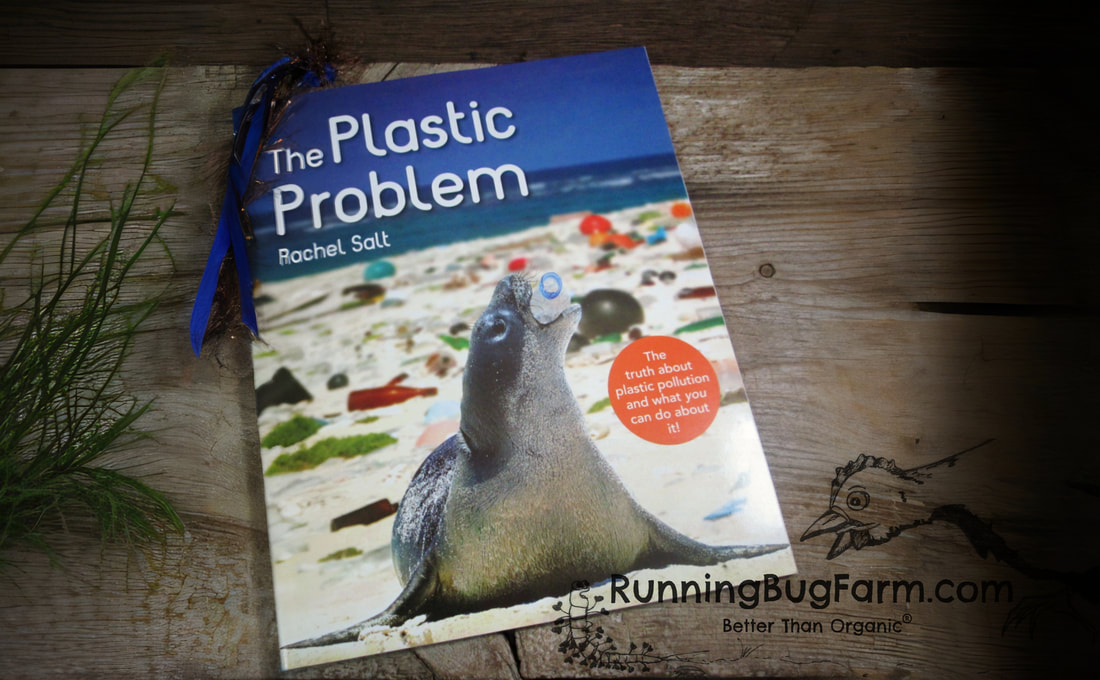
This slender book does a brilliant job illustrating through text & photography, the damages that our overuse of plastic is causing to our environment. Most disturbing is that plastic is now inside all of us. In human stool samples, out of all the people sampled, 100% had plastic in their feces. Seriously concerning. Yet, on page 58 I felt like I was reading a different book.
The Ecological Ramifications of Plastic & What to do About it
The Plastic Problem by Rachel Salt

The Plastic Problem packs a lot of information in only 80 pages by utilizing real color photos, graphs, & drawings explaining what plastic is, how it is made, the various items in the typical home that are plastic, the plastic in our groceries, how plastic creates a lot of waste, the damage plastic causes to coral & islands, that it creates deadly debris such as floating garbage patches, how wildlife think plastic is food, microplastics, plastic through the food web, how there is plastic in humans, plastic toxicity, global issues, global solutions, & the future.

This slender book does a brilliant job illustrating through text & photography, the damages that our overuse of plastic is causing to our environment. Most disturbing is that plastic is now inside all of us. In human stool samples, out of all the people sampled, 100% had plastic in their feces. Seriously concerning. The book illustrates how plastic is in our water, soil, foods, & animals, islands of plastic floating in our oceans, beaches covered in plastic, on & on it goes.

Yet, on page 58 I felt like I was reading a different book.

The author argues why "we can't completely ban plastic" The reasons why are weak at best. She actually argues that using a reusable canvas shopping bag is more environmentally damaging because it contributes more to global warming than plastic bags. Fine. But a cotton canvas bag will break down naturally. A plastic bag will not. Remember plastic in our poop? Next, let's pick on a cotton t-shirt. It seems that a plastic polyester t-shirt requires less water, therefore the author feels it is better than a cotton t-shirt. I happen to grow organic heirloom cotton. I can't speak for conventional hybrid &/or genetically modified cotton, but I can speak for what I grow. The cotton I grow enjoys a nice drink, but it has never required more watering then any of the lettuces, herbs, squash, beans, peppers, strawberries, blueberries, or other crops I organically grow. And, let's not forget the whole thing about how polyester could take 1000 years to break down (but never disappear, now it's just nano sized), while cotton breaks down naturally because, it's natural. Sorry, but I'm sticking with cotton canvas & cotton clothing over stuff made from fossil fuels.

It doesn't end with picking on cotton. What about cars? Plastic is in our cars, so they weigh less therefore plastic is better than steel. The reason is because it will cost less in fuel. Fuel from fossil fuels. The same fossil fuels that made the plastic in the car. Yet, somehow it's better. Here we go with that little problem of plastic never truly breaking down. It amazes me that for the first 57 pages this is rammed home, but now it is suddenly better than something that does break down. What?!?!

Food packaging is also picked on for virtually the same reason. Glass weighs more than plastic. What about all the chemicals that leach into the foods & the garbage problem? But but but plastic weighs less so it costs less to transport; uses less fuel. Again, the fuel that fuels the transportation system is from the same source that fuels our plastic nations.

The only area where I mostly agree with the author is regarding the medical field. Plastic creates one time use which greatly helps to reduce the risk of cross contamination.

After this "why we cannot live without plastic" nonsense the book gets back on track with The 6R's: Reduce, Reuse, Rethink, Repair, Refuse, & Recycle. Here common sense advice is given to reduce our personal plastic usage. In my home we avoid buying foods in plastic containers & jars, opting for glass whenever possible. We also grow as much of our own food as possible. We then can that food in glass mason jars that are likely to outlive us. We buy clothing made from natural fibers such as cotton, wool, hemp, & leather. If we can afford it, we buy these things organic. No polyester filled blankets or jackets. We opt for wool or down. I'd love if my home was Zero Waste, but even though it's not, we do strive to do our part to reduce our plastic usage.

The biggest way we as consumers have a voice is with how we spend our money. Corporations listen to dollar signs, not our voices. If you buy it, you support it.

Overall, if it wasn't for the 360 degree point of view change on page 58, I would have loved this book. It is laid out in a very user friendly way. It is educational & holds the readers attention. It is a keeper, suitable for kids & adults alike.

0 Comments

Your comment will be posted after it is approved.


Leave a Reply.

    Affiliate Disclosure

    This page may contain affiliate links. If you choose to make a purchase after clicking an affiliated link, I may receive a commission at no additional cost to you.

    As always, thank you so much for your support. I couldn't do what I do without you!

    Categories

    All
    Angora Rabbit Care
    Book Corner
    Garden Growing Guide
    Homesteading: The Quest For A Simple Life
    Recipe Corner

    Archives

    February 2025
    January 2025
    August 2024
    April 2024
    February 2023
    August 2022
    June 2022
    May 2022
    March 2022
    January 2022
    June 2021
    May 2021
    April 2021
    February 2021
    January 2021
    December 2020
    November 2020
    October 2020
    September 2020
    August 2020
    May 2020
    April 2020
    March 2020
    February 2020
    January 2020
    December 2019
    November 2019
    October 2019
    September 2019
    July 2019
    June 2019
    April 2019
    March 2019
    February 2019
    January 2019
    November 2018
    September 2018
    August 2018
    July 2018
    March 2018
    January 2018
    December 2017
    October 2017
    September 2017
    May 2017
    April 2017
    March 2017
    February 2017
    November 2016
    October 2016
    June 2016
    May 2016
    April 2016
    March 2016
    February 2016
    January 2016
    May 2015
    March 2015
    December 2014
    November 2014
    August 2014
    March 2014
    February 2014
    December 2013
    November 2013
    August 2013
    April 2013
    February 2013
    January 2013
    December 2012
    October 2012
    April 2012
    October 2011
    September 2011
    June 2011
    January 2011
    June 2010
    May 2010
    April 2010
    March 2010
    December 2009
    November 2009
    November 2008
    March 2008

    RSS Feed

    Do you dream about living the simple life?  Your own idyllic farm where the cows moo and the veggies are the best you've ever eaten? I've got a surprise for you, homesteading isn't easy! Join me at my small eco family farm where we stumble often, and learn as we go. This is indeed the good life, but it is also a very hard life that only rewards for that hard work... or not!  Back to the land, it's tough and I love it.Hi there! My name is Jen. I'm a "tree hugging dirt worshiper" who has been organically farming for nearly two decades. It never ceases to amaze me at how much I've learned & how much I am still learning. I have studied natural health, nutrition, & herbs for nearly three decades. Our health & the natural world around us are connected in ways we don't often realize. How we treat the land & animals directly affects us in both body & mind. My goal is to provide others with truly natural humane goods from my own little piece of paradise, & to freely pass along whatever knowledge I pick up along the way. I am grateful every day to be able to have such a worthwhile & fulfilling job surrounded by the beauty & unpredictability of Mother Nature.

    Picture
    Picture

    Copyright

    You're welcome to link to Running Bug Farm or use a single image with a brief description to link back to any post. Republishing posts in their entirety is prohibited.

Running Bug Farm Disclaimer: Nothing contained in articles &/or content is or should be considered, or used as a substitute for, veterinary or medical advice, diagnosis or treatment.
Running Bug Farm, West Union, WV, USA 26456 | © 2008-2025 All Rights Reserved
RunningBugFarm.com
  • Shop
  • Reviews
  • Blog
  • About
  • Resources & Support
  • Angora Rabbit Colors