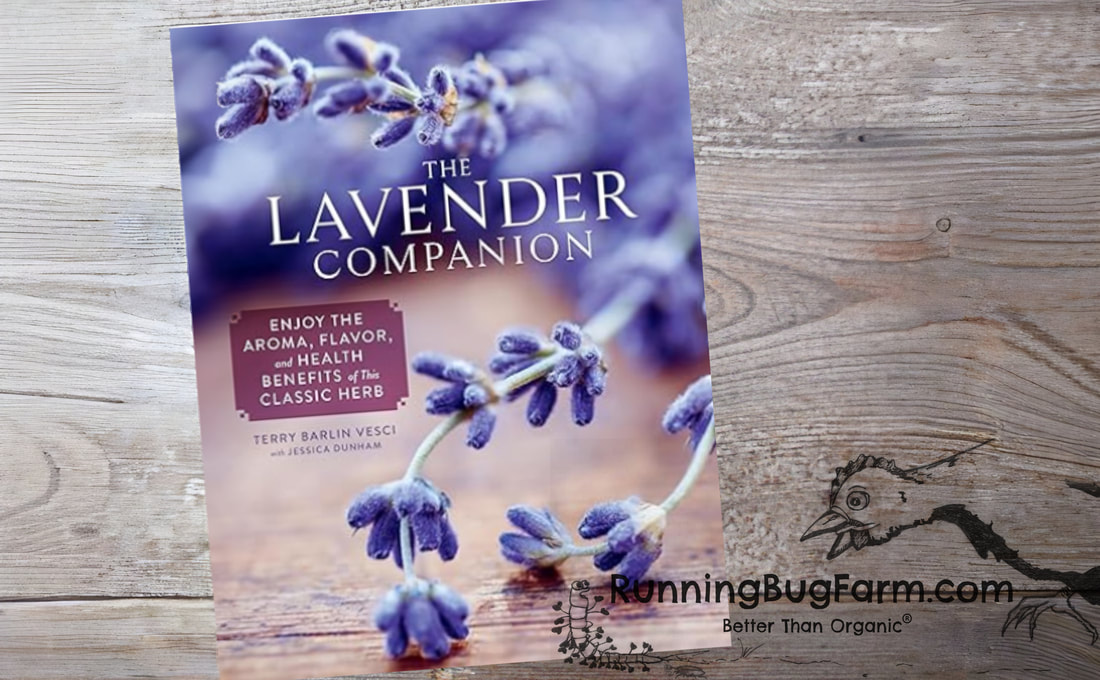
 The Lavender Companion: Enjoy the Aroma, Flavor, and Health Benefits of This Classic Herb by Terry Barlin Vesci & Jessica Dunham My first attempt at growing lavender was over a decade ago. I purchased a bunch of plants, put them in the ground, watered, and weeded them. They struggled to get off to a good start. To this day, I don't know why. They got a lot of sun and excellent drainage. After that failure, I moved on. Instead I focused on what I could grow. Frankly, those first attempts are pretty hazy in my memory. Growing things where I'm at now, was still a huge learning curve at that time. I went from the rich, black, sandy soil of the NJ shore to the dense, red, clay soil of the WV mountains. I assumed lavender wasn't a good choice for my growing area. I was wrong. As I gained experience in my growing climate and soil type. I decided I wanted to grow lavender again. This was a little more successful and I learned from observation. Plants did die. Some did not. Dampness matters. A lot. Not once did I read about how to grow lavender. I most certainly should have. This is my first book on the topic. Funny, because from about five years or so of experience at this point as a causal grower, I've learned the most important information that this book provides. Had I took the time out to read about growing lavender, I could have saved myself time and money by avoiding a lot of mistakes. Even so, I did learn from them. Personally, I feel that mistakes are fine. We all make them. If we learn from them, then it's a good thing. If on the other hand, we continue the same behavior that led to the mistake, well, I just have no words for that. The lavender I grow in my area, USDA Plant Hardiness Zone 6b, is Munstead Lavender. It is a English lavender, Lavandula angustifolia. They are smaller plants more suited to cold weather. They are also good for culinary and fragrance. Some of my plants still do not survive the winter. I am still learning. The second location I chose for my plants wasn't the best choice. It doesn't drain as good as other areas. It's not swampy, not even close. But when it rains a lot or we get several days of rain, it simply doesn't drain as good as other areas. Because I have several plants established there, I've left them there. When I aquire new plants, I plant them in dryer, better draining areas with soil that isn't as rich. What I like best about The Lavender Companion is the stunning photography and the inspirational story behind Pine Creek Lavender Farm. I was under the impression that the beautiful photos were all taken at Pine Creek Lavender Farm. And that the photos were of their own lavender and farm. At the end of the book I was disappointed to read that another lavender farm provided photos. I'm not sure how many or which. Now knowing this, I would like to see small text with each photo crediting where it came from. The authors created such a wonderful vibe with the story behind their successful farm based business. Properly identifying the photos helps paint a more accurate picture of Pine Creek Lavender Farm. The Lavender Companion starts off with some very interesting history on lavender and it's uses. It also lists several varieties of lavender with photos. The book mainly focuses on the three types of lavender grown on Pine Creek Lavender Farm. I knew there were different varieties of lavender. However, I never knew there were so many varieties or that lavender can come in other colors. This is yet another example of, no matter how much one knows, there's always more to learn. The introduction implies that this is mainly a cookbook. Heck, they indicate that they offer a lavender cooking and baking school! While this does have recipes (I list all of them later in my review), it's not a cookbook in the way one would expect. If I'm buying a lavender cookbook, I expect a lot of recipes with lavender. While this does contain a nice little handful of various recipes, the quantity simply does not meet expectations the introduction created. If you are looking for a lavender cookbook and that's it, you may not be happy. Please take a peek at the recipes I have listed to see what you think. My hopes in acquiring this book was to both learn more about the lavender that I grow and to find additional creative ways to put it to use. Cooking with lavender was the lowest of priorities. Considering that I haven't found lavender teas to my liking, I figure I wont like it in cooking either. For me, it seems like drinking perfume. However, I know folks who simply love lavender in their drinks and foods. Because it's been over a decade since trying lavender in anything I consume, I am going to give it another go after reading this book. For the cooking section, the type of lavender that works best for the recipe is provided. If you don't have or grow several varieties of lavender, as long as it's a culinary lavender, it should work. Obviously if you do have the lavender called for in the recipe, all the better. In The Kitchen:
As you can see, essential oils are not used. The cooking recipes all utilize actual lavender just like you would use herbs. Fresh out of the garden if you are lucky to be growing your own herbs. In order to make many of the other recipes in this book, the first nine recipes should be made in advance. They are the pantry staples. I plan on working them into my cooking schedule over time. I'm most likely to make the Lavender Roasted Potatoes first (minus the pepper & with sweet potatoes as I avoid nightshades & seeds for my AIP lifestyle). Other recipes aside from the pantry basics, I may avoid or alter to fit my dietary requirements. For most folks though, this will not be an issue. Baking With Lavender:
I'm not a big ice cream eater. I don't consume dairy because I cannot tolerate it. I do like to make ice cream with coconut milk. It might not sound good, but it is amazing! I sometimes will make a batch of rum raisin coconut milk ice cream or regular vanilla coconut milk ice cream. I am thinking about making a batch of vanilla & adding a little lavender to a serving to see if I like it before committing an entire batch. Lavender Mixology:
Even though I mentioned that drinking lavender teas seems like drinking perfume to me, I am going to try the Lavender Cocoa and the Lavender Mint Sun Tea. I really hope I enjoy both. Hot Cocoa is my sweet tooth downfall. I'm not sure what I'll think of this. I'll be finding out soon. I do know that I love rose in my hot cocoa. I grow peppermint, spearmint, and chocolate mint on my Eco farm. If I like mint and lavender this is sure to be a refreshing summer beverage (minus the sweetener). The Body Care recipes are pretty basic. They mostly use lavender essential oil which isn't what I was looking for because I don't make my own lavender essential oil.
In The Home: This features a really fun lavender braid. There are so many uses and possibilities for this. It's such a simple and useful project. Great for selling at the farmers market, gift giving, and for storing herbs in the kitchen for personal use. This recipe utilized lavender stalks.
I'm highly likely to make the Lavender Braid. Being a Eco farm woman, I grow everything required to make this braid and to even make some of my own variations. I have already made my own versions of sachets which I love. There is a chapter on growing lavender. It is surprisingly basic. Lavender isn't fussy. It doesn't have a lot of requirements. Mainly, don't over water it. If anything, once established, let it be a little dry. Too much moisture kills more than it helps. Pine Creek Lavender Farm is in Arizona. They seem to have a great climate for growing abundant amounts of different types of lavender. Even though the care is rather simple, I still learned a little. Had I not already made so many mistakes as mentioned earlier, I would have learned a lot more. I love the harvesting and drying suggestions in this chapter. Naturally, I have my own methods that have worked wonderfully, but I also like how they recommend doing things as well. When I begin to harvest this year, I will be incorporating some of their recommendations into my routine. I look forward to adding this informative book to my shelves, when it is published. I received an advanced readers e-copy (ARC) of this book from Netgalley, Terry Barlin Vesci & Jessica Dunham and Storey Publishing for an honest review. You may also like:
Book Corner Quick Links 📚
Links to the books I've read & reviewed for your convenience!
0 Comments
Your comment will be posted after it is approved.
Leave a Reply. |
Affiliate DisclosureAs an Amazon Associate, I earn from qualifying purchases.
This page may contain Amazon affiliate links. If you choose to make a purchase after clicking a Amazon link, I may receive a commission from Amazon at no additional cost to you. As always, Thank you so much for your support. I couldn't do what I do without you! Categories
All
Archives
April 2024
 Hi there! My name is Jen. I'm a "tree hugging dirt worshiper" who has been organically farming for nearly two decades. It never ceases to amaze me at how much I've learned & how much I am still learning. I have studied natural health, nutrition, & herbs for nearly three decades. Our health & the natural world around us are connected in ways we don't often realize. How we treat the land & animals directly affects us in both body & mind. My goal is to provide others with truly natural humane goods from my own little piece of paradise, & to freely pass along whatever knowledge I pick up along the way. I am grateful every day to be able to have such a worthwhile & fulfilling job surrounded by the beauty & unpredictability of Mother Nature. Hi there! My name is Jen. I'm a "tree hugging dirt worshiper" who has been organically farming for nearly two decades. It never ceases to amaze me at how much I've learned & how much I am still learning. I have studied natural health, nutrition, & herbs for nearly three decades. Our health & the natural world around us are connected in ways we don't often realize. How we treat the land & animals directly affects us in both body & mind. My goal is to provide others with truly natural humane goods from my own little piece of paradise, & to freely pass along whatever knowledge I pick up along the way. I am grateful every day to be able to have such a worthwhile & fulfilling job surrounded by the beauty & unpredictability of Mother Nature.

Copyright
You're welcome to link to Running Bug Farm or use a single image with a brief description to link back to any post. Republishing posts in their entirety is prohibited. |
 RSS Feed