|
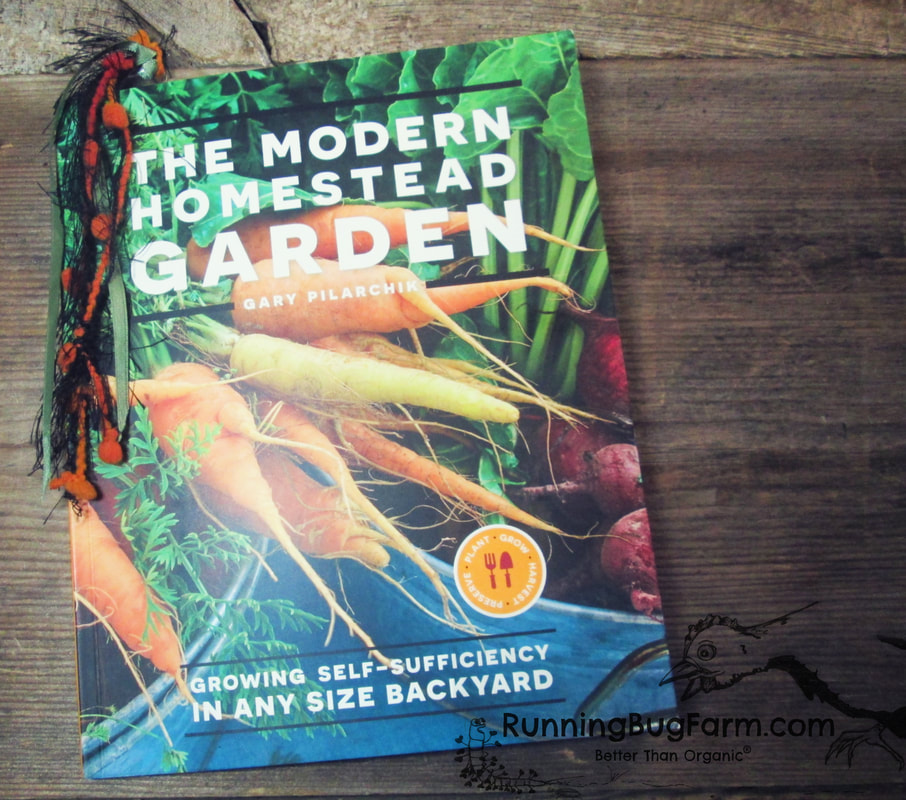
The Modern Homestead Garden: Growing Self-Sufficiency In Any Size Backyard by Gary Pilarchik
This is a very approachable book that is geared more towards beginners than those who are already experienced in food gardening. The author stresses the importance of just getting started. There is no reason to over complicate the process. You can learn as you go. I find this very refreshing. Nothing is ridged & the reader is encouraged to work with what they have & of course, grow what is of interest to them. It is clear that the author has a very small homestead garden. This enforces the fact that one doesn't have to have acres of land in order to feed oneself. The importance of reducing ones dependence on outside sources cannot be stressed enough. To be fair no homestead is an island & you will likely always need to bring in outside sources. However, the idea is to reduce this dependency as much as possible. Being a full time Eco farmer with acreage, I can tell you right now, that I only grow foodstuffs on a very small portion of my land. The rest is in hay or what I call pasture which is mainly for my cattle, although my birds & bunnies get a lot of enjoyment out of it as well. Growing your own food can be an incredible amount of work. This takes me back to the beginning. Start small & learn. It doesn't matter if you are growing one tomato plant on your apartment balcony, starting 5 raised beds, square foot gardening, or dreaming of something bigger. Just start small & grow from there. This book solely focuses on the authors experience in his own homestead garden. This is important to note because everyone has different climates, therefore different growing needs. This doesn't mean the information presented is not of value, it is. Vegetables discussed are the following: Peppers Squash & Zucchini Cucumbers Beans Peas Cauliflower & Broccoli Kale & Collard Greens Cabbages Radishes Asparagus Onions Lettuces After exploring these vegetables in some detail the author discusses buying seeds (I have a minor disagreement here), seed starting, & transplants. My minor disagreement is that the author feels it doesn't matter if you buy conventional or organic seeds as you cannot buy GMO seeds. While it is true that you have to be under contract to grow GMO seed plants & that it is highly unlikely any seed you order or buy at the store for home use will be genetically modified, that is still no reason not to buy organic seed. My reason is that you are supporting a growing method that is kinder to the environment & the workers. As with everything else you buy, when you buy organic seed, you send a clear message to businesses that this is what you want. Nothing speaks louder than how we chose to spend our money. I also think it's important to support heritage seed suppliers as we are loosing more of our plant diversity. To me, conventional seed should only be purchased when all other resources have been exhausted. One of the things I really like about this book is how the author stresses the importance of compost. Basically, if you always add compost, you'll likely never need to feed your garden anything else. Thankfully the author leans towards organic options should you find you need to buy soil amendments aka fertilizer. However, the author does give the green light on using conventional fertilizers on occasion if needed. I have been organically growing my own crops for nearly two decades & I have never, not once resorted to conventional methods to feed my crops. In fact, the only fertilizer I use consistently is OMRI approved to make the soil more acidic for my acid loving plants like blueberries, evergreen trees & strawberries. The author truly is dead to rights that if you consistently add plenty of compost to your beds at a minimum of once a year, you should never need to add anything to your soil to keep your garden healthy. Chapter Five 'Building Earth And Raised Beds'. This is a short chapter but still useful. Here the author shows several ways you can create raised beds & sunken containers. He also discuses how to use soil amendments such as peat moss, coco coir, organic fertilizers, compost & manures. Chapter Six 'Homestead Container Gardening'. This is great for those of you wanting to start small. In the beginning I did a lot of container gardening. It absolutely has it's pro's & con's as the author explains. Personally, I am not a big fan of container gardening, but that doesn't mean it can't be incredibly useful depending on ones growing situation. You even get to learn how to make your own container soil rather than buying a premix bags which can get expensive very fast. Chapter Seven 'Tending Your Gardens'. This is all about maintaining healthy soils (hint: compost), watering, crop support, pruning, etc. Chapter Eight is the dreaded chapter about pests, diseases, & the power of pollinators. The author keeps this pretty simple. He explains what he has found works best for him in dealing with various pests. The recipes provided are for natural methods like diluted soap, essential oils, baking soda, sulfur, & neem. The author also explains the importance of growing crops such as flowers that will attract beneficial insects to your garden. This is a method I have always employed. My crops share space with a wide variety of flowering plants which means I see an abundance of bees, butterflies, ground wasps & more. The author also mentions attracting birds. This is an iffy one as the birds can also become the pests, eating your crops. Chapter Nine discusses growing fruit crops. What the author calls an edible landscape. The following are discussed: Strawberries Mulberries Goji Berries Blueberries (my favorite) Raspberries Blackberries Grapes (something I want to grow) Fruit & Nut Trees In chapter ten you finally get to store & eat your harvest. Very basic pickling, canning, drying & freezing is discussed with a small handful of recipes. I highly recommend The Ball Blue Book mainly for canning guidance although it does cover other food preservation methods & Wild Fermentation if you are interesting in fermenting your foodstuffs. Throughout the book there are plenty of charts & photos to both inspire you & help you along. While I am well beyond being a beginner, I enjoyed this book very much & consider it a keeper. I plan on trying a few of the pest treatment methods as I do have my own. However, I'm curious to see if some of the authors methods are more successful for me. Comments are closed.
|
Affiliate DisclosureThis page may contain affiliate links. If you choose to make a purchase after clicking an affiliated link, I may receive a commission at no additional cost to you.
As always, thank you so much for your support. I couldn't do what I do without you! Categories
All
Archives
February 2025
Hi there! My name is Jen. I'm a "tree hugging dirt worshiper" who has been organically farming for nearly two decades. It never ceases to amaze me at how much I've learned & how much I am still learning. I have studied natural health, nutrition, & herbs for nearly three decades. Our health & the natural world around us are connected in ways we don't often realize. How we treat the land & animals directly affects us in both body & mind. My goal is to provide others with truly natural humane goods from my own little piece of paradise, & to freely pass along whatever knowledge I pick up along the way. I am grateful every day to be able to have such a worthwhile & fulfilling job surrounded by the beauty & unpredictability of Mother Nature.
Copyright
You're welcome to link to Running Bug Farm or use a single image with a brief description to link back to any post. Republishing posts in their entirety is prohibited. |
RSS Feed